

Dynami
Ergonomic drill machine for hobbyists.
Industrial Design
Technically Complex Product Design, Prototype, Ergonomics, User testing
Academic Project, Individual, 2023
Duration: 2.5 months
Guide: Mr. Shashank Mehta, Mr. Prakash Vani
Tools: Rhino, Key Shot, Sketching, Workshop prototyping
Brief: Designing a hand drill machine for hobbyist and households, enabling ease of use and efficiency.
About the project:
Using drill machines with accuracy has always been a challenge for infrequent users such as hobbyists and household users. As part of my 6th semester project, I chose to create a drill machine which is more ergonomic, less intimidating and solves various inconveniences that come with conventional corded drill machines. I learned a lot avigating the project through mock-ups and user feedbacks.


Understanding the context
To redesign something, I needed to start from the beginning.
So the project commenced by me dismantling a drill machine, which was an incredibly intimidating thing for me, but after this, I grew more comfortable understanding products inside and out.
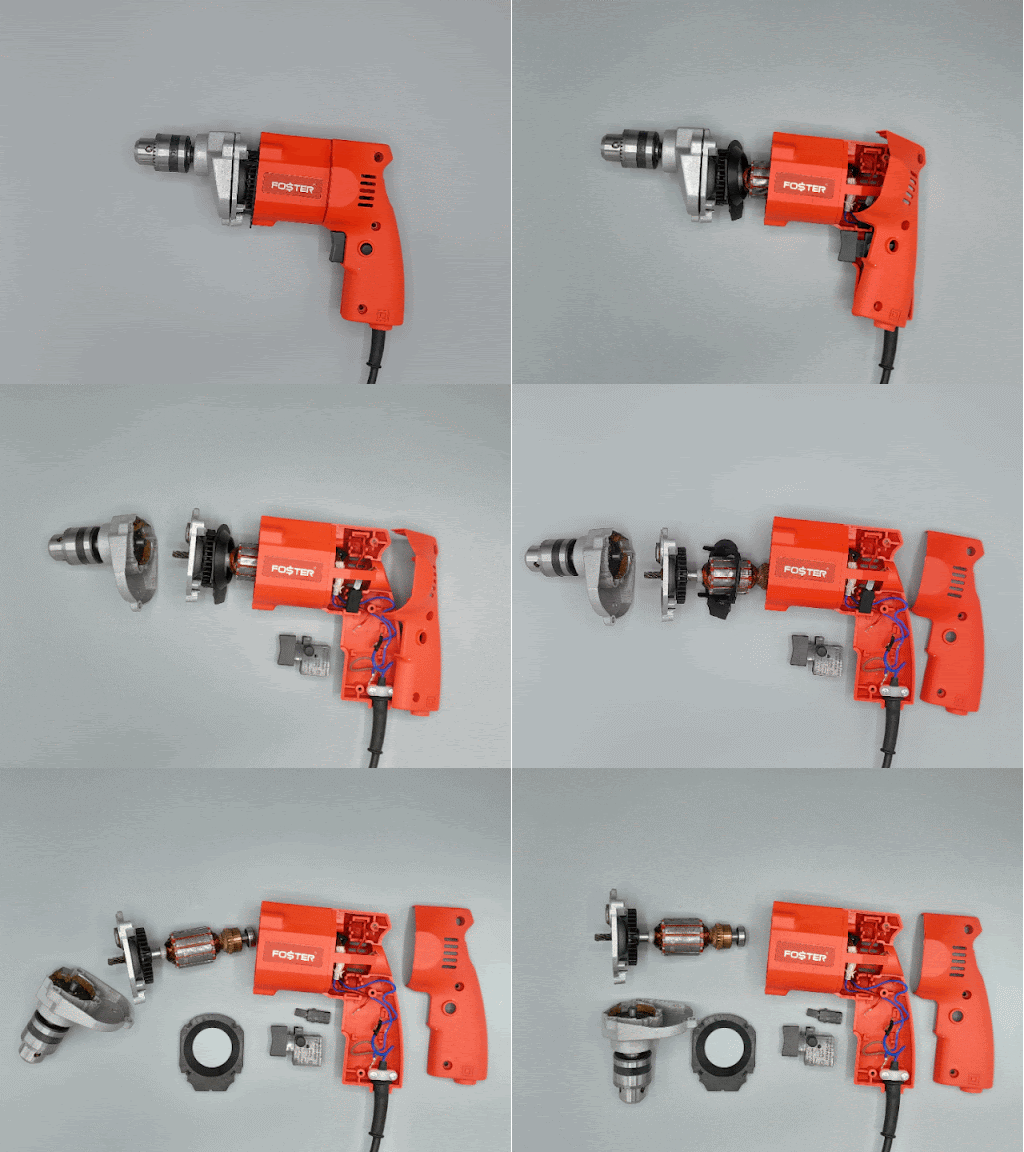


This is a corded drill machine by Foster, suitable for a 10 mm chuck and drills through a variety of materials like wood and steel. It is said to be ideal for hobbyists.
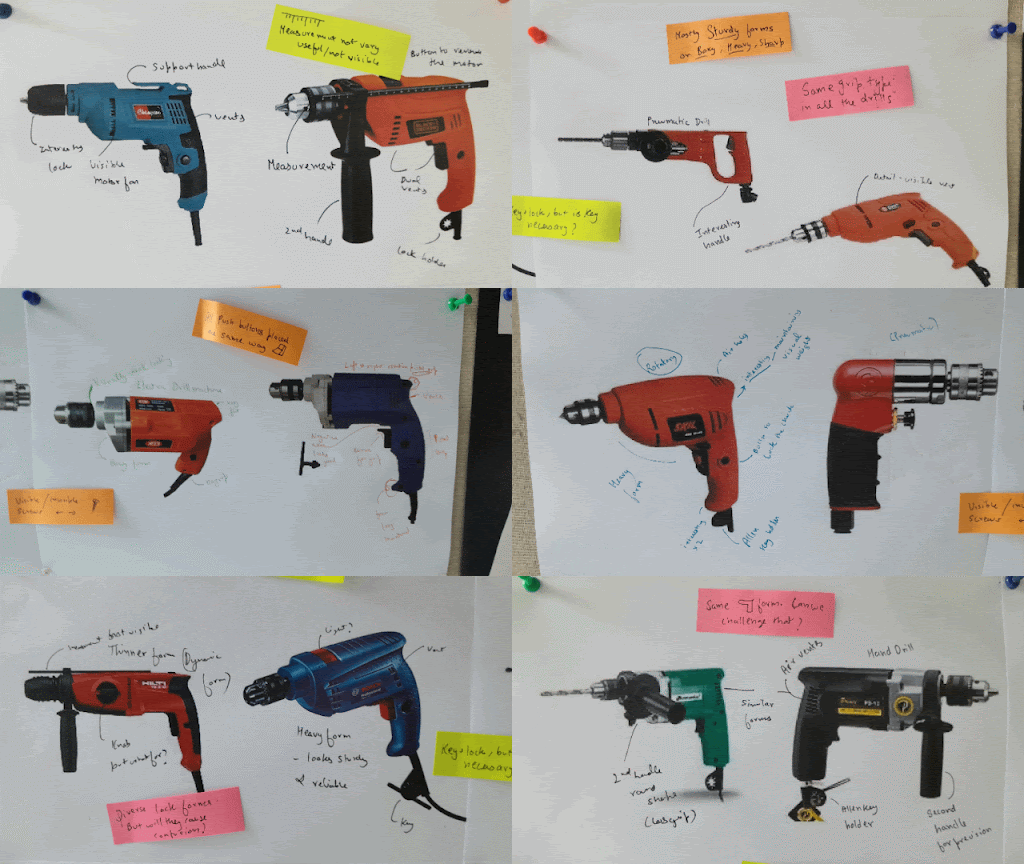
Looking around
I also looked at a variety of other drill machines, their use cases, forms, target audiences and how they worked.


Identified use cases and Personas
The users who were used to handling drill machines regularly, such as construction workers, workshop workers and seasoned creators, faced little to no problem handling the device.
Though a quick survey, I could find out that the problem lied with people who were too scared to use the machine, or were infrequent users who didn't like using it due to the bad user experience.
The selected persona for this project was, therefore, infrequent users and hobbyists.

User research
Since my target audience was people who are hobbyists and new to the concept of drilling, I asked volunteers around the college (especially people for the visual communication design streams) to demonstrate how they would use a drill machine. I then did a task analysis and took their interviews.

Analysis
There were a lot of things wrong with the existing product, ergonomic issues, lack of feedback when the device was on or off, the vibrating machine could cause injuries if not handled properly.

I noted down all the concerns and how might I solve them at a very surface level.

The brief derived out of these observations was:
How might we design a hand drill machine for hobbyist and households, enabling ease of use and efficiency.

I made thermocol models to test which grip worked better, or if I needed to change the grip at all.
The conclusion was that the original gun shape was preferred by most individuals.
I did this exercise parallelly while sketching ideas to cancel out the forms that didn't work.
Ideation Sketches

The selected concept was a dual hand operating drill machine.
Based on faculty feedback on my research, I was able to determine which idea worked best and fit the scope of the assignment.

To test out the concept, I first made a cardboard mockup.
It ended up being a success.

The keywords chosen to develop the mood board were:
Futuristic, Robust, Dynamic and Clean.
Distributing the weight and working with the dynamism of the form on paper to see what works best.

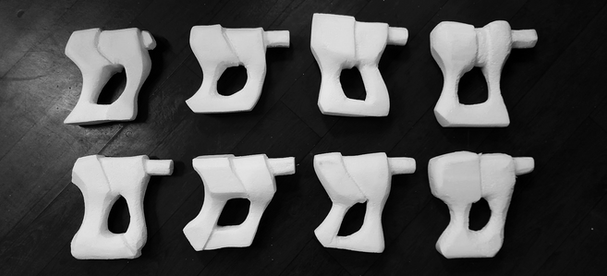
I made quick thermocol form models experimenting with the weight distribution of the two divisions.

After taking feedback from various people, this was the selected form. It had the perfect grip diameter and was dynamic enough to look like a power tool.

The selected form, refined on paper

Dynami
Ergonomic drill for hobbyists
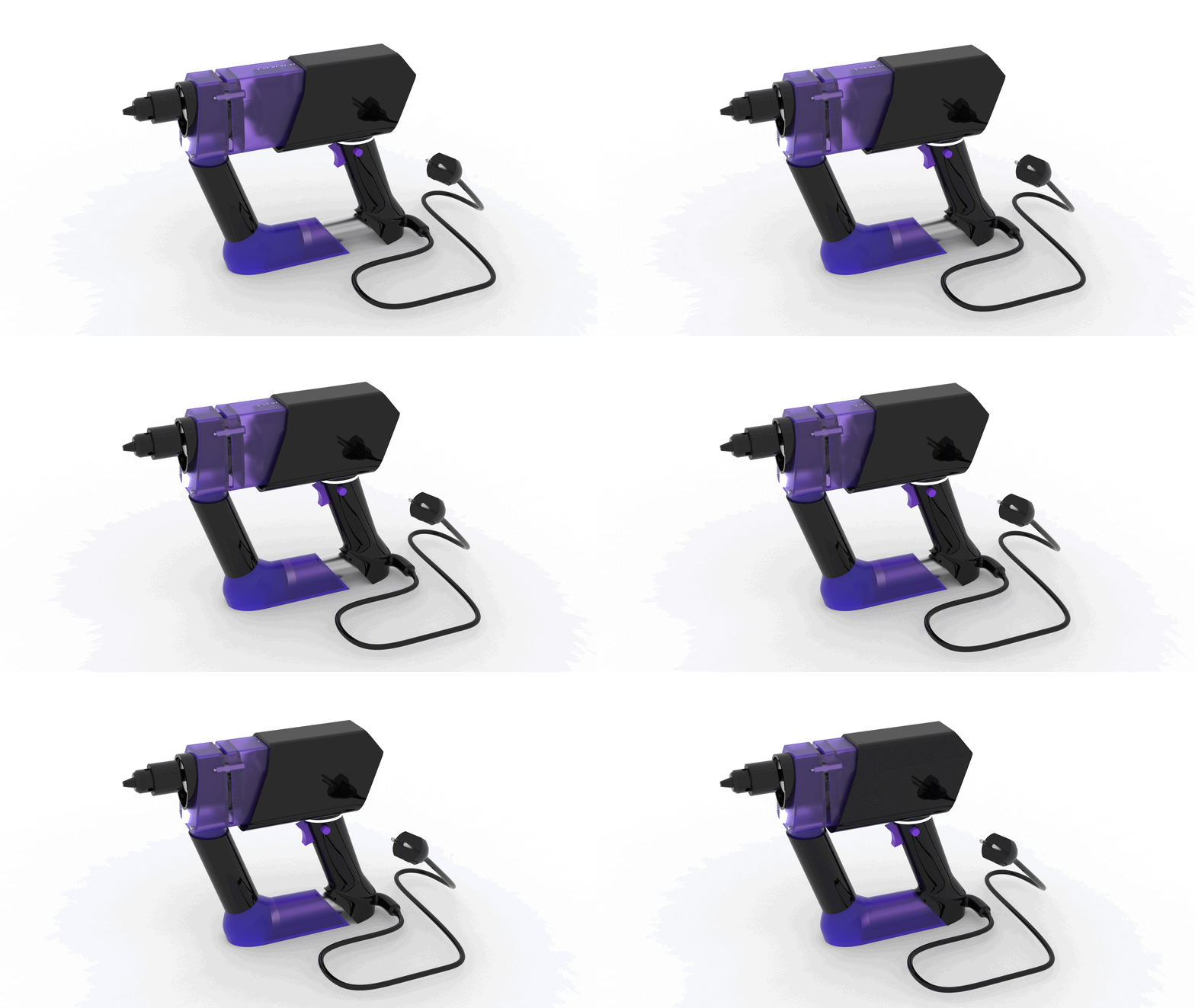
The main feature of the drill is its dual hand operation and its ability to stretch.
The reasoning behind this is:
1. Better support to prevent the forward tilt of the 2kg heavy machine.
2. Maintain the Ninety degree angle for straight drilling.
3. Gauge the depth with ease.
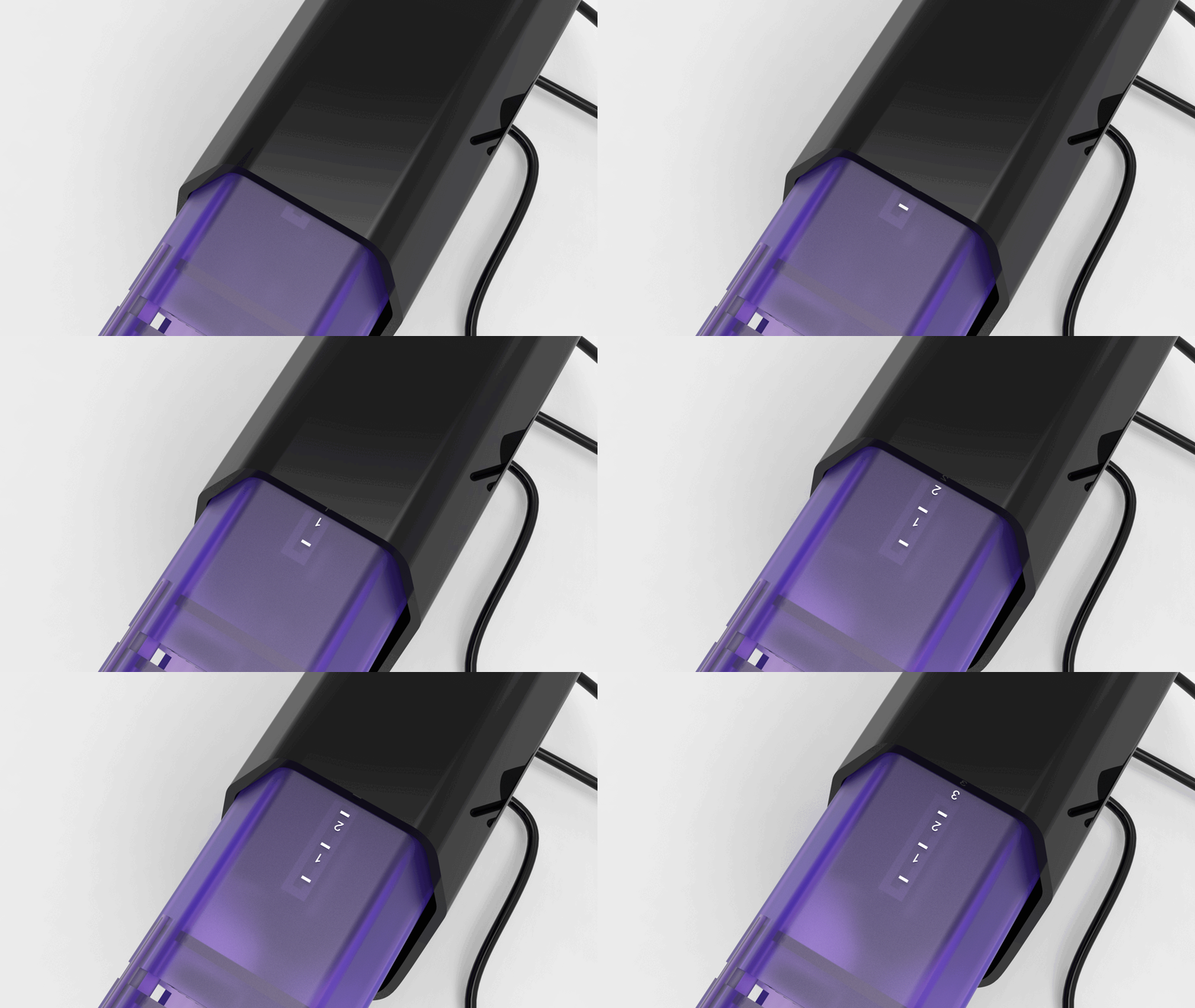
The section beneath the back portion of the machine reveals a scale for measuremnet.

Although not tested, another solution I came up with for the dust problem was a stretchable silicone cup, which retracts slowly as you push the machine in the wall.

Another intervention was to add a light for visibility and a ring light around the back handle to show if the machine was on or off.

A suggestion for the DFMA, keeping material and size considerations in mind.


Making the prototype
The making part was much easier this time as I opted for a 3D printed mock-up instead of making it in the workshop. It felt really nice seeing something I designed come to life for the first time!
I did a grip test with different people and everyone approved! It was more comfortable than the regular drill machine.
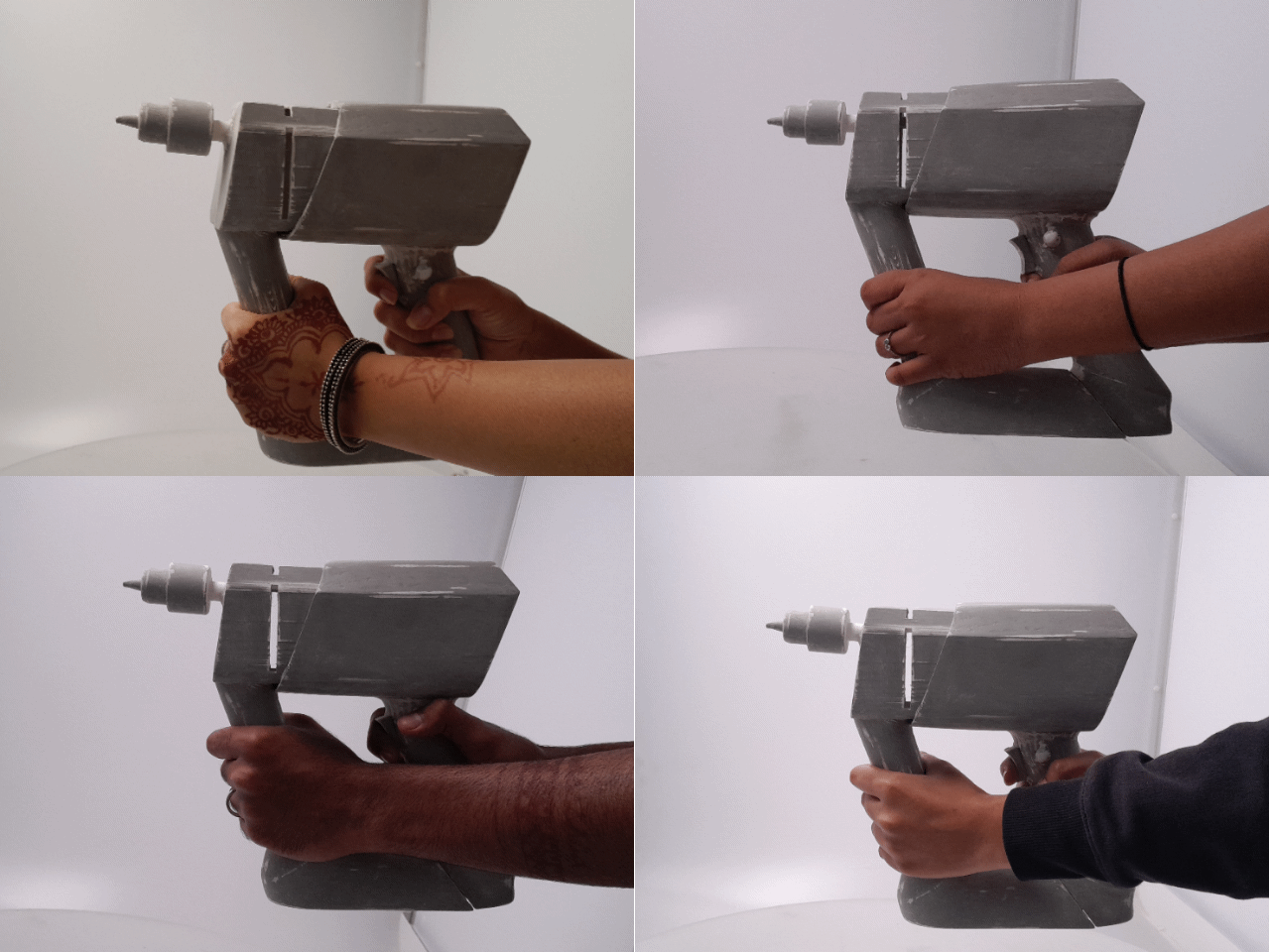

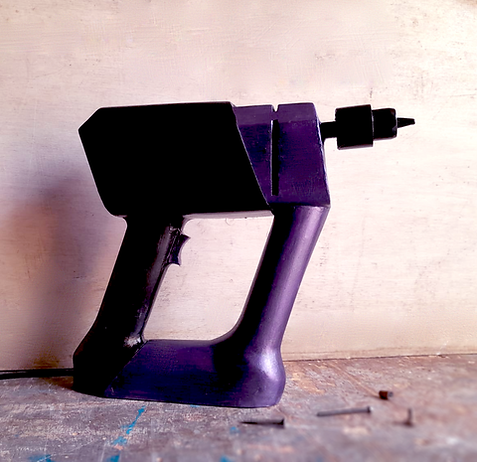


I learned a lot through this project, made my first original 3D model, got to get it printed and do user testing. Really grateful for everyone who was a part of it.
Thank you for coming this far!